Beware of “fake injectors”
Learn how to recognize fake injectors, avoid serious risks, and choose a qualified doctor for your cosmetic injections.


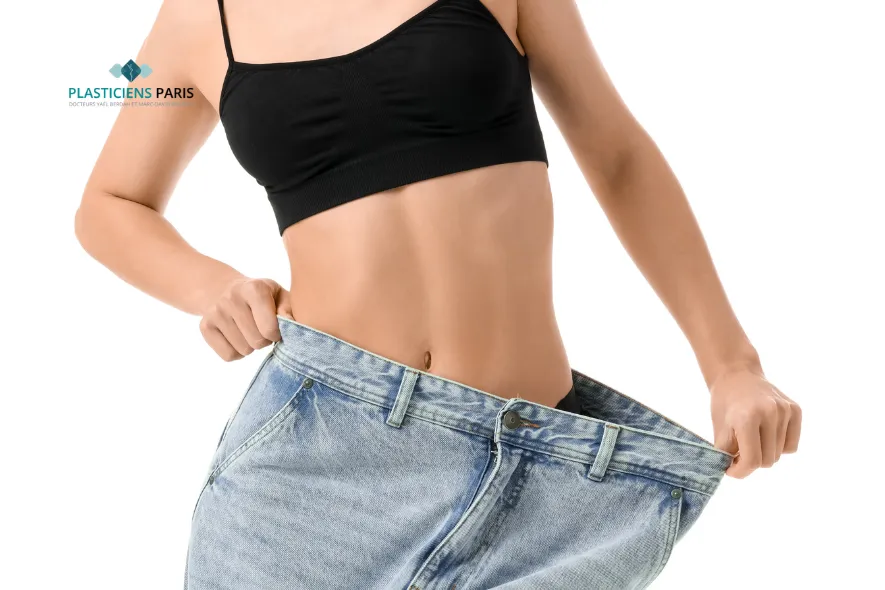
Liposuction changes the way your body looks in clothes. For some people, the stomach flattens out gently. For others, the hips slim down or saddlebags disappear. Patients can watch these changes unfold over the weeks following surgery, as swelling goes down and the skin settles back into place. But exactly how many sizes can you drop after liposuction of the stomach, thighs or hips? Here is what Doctors Yaël Berdah and Marc-David Benjoar have to say.
Liposuction targets fat that stubbornly stays put despite dieting or exercise. The surgeon first injects a mix of local anaesthetic, saline solution and adrenaline into the fatty tissue – adrenaline is used here to limit bleeding. Thin tubes called cannulas are then inserted through tiny 5 mm incisions. The fat is suctioned away layer by layer, keeping the transition between treated and untreated areas smooth and natural.
In the practice of Drs Berdah and Benjoar, the instruments used are intentionally slender. This allows them to feel tissue resistance more precisely and adjust their movements down to the millimetre.
A compression garment is fitted immediately after the procedure to help the skin reorganise itself. It supports the early stages of skin tightening while the tissues are still tender.
The days following surgery typically involve some swelling and possibly bruising, followed by a gradual reduction in volume. The first visible changes generally appear around the one-month mark, and the final result stabilises between 3 and 6 months.
Good to know – For a single area, Drs Berdah and Benjoar can perform the procedure under local anaesthesia alone or under sedation. When multiple areas are treated in the same session, general anaesthesia is used. A pre-anaesthetic consultation is always required before surgery.
Liposuction is best suited to areas where fat tends to accumulate and resist change: abdomen, hips, love handles, back, thighs, saddlebags, inner knees, calves, arms and double chin.
These areas can create an imbalance in the overall silhouette – a stomach that pushes forward slightly, a curve at the side that shows through trousers, or a fold that weighs down the line of a thigh. The volumes involved are not always large; it is more often a matter of areas that disrupt overall harmony or make certain clothes uncomfortable to wear.
Skin quality plays a key role in how well it tightens afterwards. Firmer skin responds quickly, while looser skin takes more time. Drs Berdah and Benjoar have observed that combined treatment – such as the abdomen and hips together – often produces a more noticeably transformed result.
Good to know – The fat cells that are removed are gone for good. The treated area therefore retains a smaller volume even in the long term, though other areas of the body continue to respond to weight changes as normal.
Most patients drop 1 to 2 clothing sizes after a well-targeted liposuction. In terms of waist circumference, the reduction is typically 2 to 5 cm, and sometimes more when both the abdomen and hips are treated at the same time.
Actual weight loss is minimal, since fat is light. What changes is the shape: a stomach that no longer protrudes as much, a waist that curves in slightly, trousers that no longer pull at the hips, thighs that no longer rub together.
Around the third week, swelling begins to subside. Clothes start to fit better, the treated area feels less dense, and the final contours become clearer. Reshaping then continues gradually over the following months as the skin firms up and the internal tissues heal.
Liposuction removes fat cells, and those cells do not grow back. The treated area therefore stays slimmer than before. That said, the procedure does not remove every single fat cell from the area – if significant weight is gained, some volume can return, though far less than originally.
What can change over time are the untreated areas. When weight increases, those are the first to respond. Drs Berdah and Benjoar make a point of explaining this to patients during consultations: liposuction does not protect the whole body from weight gain – it simply stabilises the specific area that was treated.
As long as weight remains stable, results remain stable. Light exercise from day 10, a few lymphatic drainage sessions and sensible lifestyle habits are generally enough to maintain the slimming effect.
How many centimetres can you lose from a stomach liposuction? Usually 2 to 5 cm, and sometimes more if the hips are treated at the same time.
Can you drop 2 trouser sizes after liposuction? Yes. This is one of the most commonly seen outcomes for abdominal and lateral areas.
Why does the area stay swollen for several weeks? Swelling takes time to go down. The first results appear around week 3, then continue to refine for up to 6 months.
Does liposuction make you lose weight? Not significantly. The benefit shows up in centimetres and clothing sizes rather than on the scales.
Can fat come back after liposuction? Not in the treated area, as long as weight stays stable. If weight is gained, the untreated areas are the first to be affected. The aim of the procedure is to reshape and harmonise the silhouette.

À propos de l'auteur
Chirurgien plasticien à Paris, spécialisé en rhinoplastie, augmentation mammaire mini-invasive et reconstruction mammaire par lambeau DIEP
Ancien Chef de Clinique Assistant des Hôpitaux, praticien attaché à l'Hôpital Européen Georges Pompidou, où il a participé à 7 greffes du visage · Membre de l'équipe de chirurgiens plasticiens de l'Institut Français du Sein depuis 2015 · Enseignant au Diplôme Universitaire de techniques endoscopiques en chirurgie plastique · Associé depuis 2010 au sein du cabinet Plasticiens Paris
Learn how to recognize fake injectors, avoid serious risks, and choose a qualified doctor for your cosmetic injections.
Find out about the conditions for reimbursement of labiaplasty by Social Security and mutual insurance companies. Expert opinions from Dr. Benjoar and Dr. Berdah.
Everything you need to know about breast implant replacement: lifespan, medical or cosmetic reasons, cost, and coverage by Social Security.