

Breast Implants – Why Should All PIP Breast Implants Be Removed?
PIP breast implants pose serious health risks due to faulty design and industrial-grade silicone. Learn why full removal is strongly recommended.
Breast Implants – Why Should All PIP Breast Implants Be Removed?
Following a meeting of an expert committee on the use of PIP implants in breast augmentation, the French Minister of Health, Xavier Bertrand, decided to recommend the systematic removal and replacement of these implants for all patients, whether or not they show signs of rupture.
I fully support this decision, and here’s why:
1. Serious Manufacturing Deficiencies
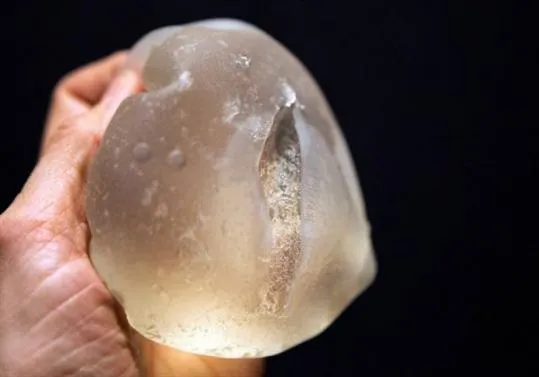
There were major deficiencies in the manufacturing and quality control of the PIP breast implant shell. The shell is supposed to include three layers of silicone elastomer, one of which is a barrier layer designed to prevent silicone gel from seeping through the implant envelope.
PIP laboratories reportedly removed this critical barrier layer and failed to conduct proper testing for envelope resistance and durability. As a result, the rupture rate for these implants is abnormally high: 15% to 30% at five years, compared to less than 3% for standard, validated implants.
2. Use of Industrial Gel Instead of Medical-Grade Silicone
What’s more concerning is that the silicone gel used in PIP implants was industrial-grade, not approved for medical use. Unlike cohesive medical-grade gels used in validated implants, this industrial silicone lacks stability and tends to diffuse once the envelope is compromised.
Numerous cases of “siliconomas”—the migration of liquid silicone into the body (axillary lymph nodes, ribs, back, etc.)—have been documented. The surgical management of these complications is extremely challenging and can leave significant after-effects.
3. Cancer Risk Not Evident, But Complications Are Serious
To date, there is no evidence that PIP implants increase the risk of breast cancer or lymphoma. However, it is the risk of siliconomas and the potential severity of their complications that justifies this proactive decision.
4. A Clear Benefit-Risk Assessment
- If the implant is intact: Removal involves a 30-minute, low-risk procedure, typically with no long-term side effects.
- If the implant is ruptured: Surgery can last 2 to 3 hours, carries more surgical risk, and can result in lasting complications.
The benefit-risk balance clearly favors preventive removal, even in asymptomatic patients.
5. Financial Support and Access to Care
Health insurance in France is mobilizing to handle this public health crisis:
- Full coverage for implant replacement in patients whose original implants were reimbursed for medical reasons (breast cancer, aplasia, major asymmetry).
- Full removal costs are covered for patients with implants placed for aesthetic purposes (replacement not reimbursed).
French plastic surgeons are committed to:
- Reducing their fees to make surgery more accessible.
- Offering priority care in public hospitals (e.g., Georges Pompidou European Hospital, Paris) for women in financial hardship.
- Ensuring a coordinated, equitable response across public and private sectors.
6. National Support Resources
A dedicated hotline has been established for patients:
📞 0800 636 636For more practical guidance and information, please refer to the DGS report on the ANSM website.

À propos de l'auteur
Dr. Marc-David Benjoar
Chirurgien plasticien à Paris, spécialisé en rhinoplastie, augmentation mammaire mini-invasive et reconstruction mammaire par lambeau DIEP
4,8 / 5
Calculée sur + 400 avis patients, note globale du cabinet Plasticiens Paris
★★★★★
4,8 · +400 avis
Presse & télévision
Formation & diplômes
- Docteur en Médecine
- DESC de Chirurgie Plastique, Reconstructrice et Esthétique (seul diplôme autorisant l'exercice depuis 1986)
- Université Paris VII-Paris Cité
- Ancien interne et Chef de clinique des Hôpitaux de Paris, formé à l'Hôpital Européen Georges Pompidou auprès du Pr Lantieri
- Collège Français de Chirurgie Plastique Reconstructrice et Esthétique
- Concours de l'internat, major de promotion chirurgie Paris, médaille d'or de chirurgie des hôpitaux de Paris
- Prix Le Dentu-Renon (Académie nationale de Chirurgie), prix James Barrett Brown (AAPS)
- Master M2 de sciences chirurgicales · DIU anatomie appliquée à la chirurgie plastique · DIU chirurgie de la main · DU techniques microchirurgicales
- Inscrit à l'Ordre des médecins de Paris n° 75/77646 (RPPS 10004402102)
Engagement hospitalier et institutionnel
Ancien Chef de Clinique Assistant des Hôpitaux, praticien attaché à l'Hôpital Européen Georges Pompidou, où il a participé à 7 greffes du visage · Membre de l'équipe de chirurgiens plasticiens de l'Institut Français du Sein depuis 2015 · Enseignant au Diplôme Universitaire de techniques endoscopiques en chirurgie plastique · Associé depuis 2010 au sein du cabinet Plasticiens Paris
Spécialités
Read also
Beware of “fake injectors”
Learn how to recognize fake injectors, avoid serious risks, and choose a qualified doctor for your cosmetic injections.
Nymphoplasty Reimbursement: How Much Is Covered for Labioplasty?
Find out about the conditions for reimbursement of labiaplasty by Social Security and mutual insurance companies. Expert opinions from Dr. Benjoar and Dr. Berdah.