
Beware of “fake injectors”
Learn how to recognize fake injectors, avoid serious risks, and choose a qualified doctor for your cosmetic injections.


PIP breast implants pose serious health risks due to faulty design and industrial-grade silicone. Learn why full removal is strongly recommended.
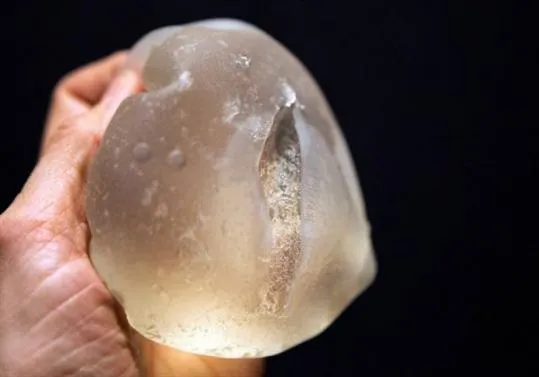
Following a meeting of an expert committee on the use of PIP implants in breast augmentation, the French Minister of Health, Xavier Bertrand, decided to recommend the systematic removal and replacement of these implants for all patients, whether or not they show signs of rupture.
I fully support this decision, and here’s why:
There were major deficiencies in the manufacturing and quality control of the PIP breast implant shell. The shell is supposed to include three layers of silicone elastomer, one of which is a barrier layer designed to prevent silicone gel from seeping through the implant envelope.
PIP laboratories reportedly removed this critical barrier layer and failed to conduct proper testing for envelope resistance and durability. As a result, the rupture rate for these implants is abnormally high: 15% to 30% at five years, compared to less than 3% for standard, validated implants.
What’s more concerning is that the silicone gel used in PIP implants was industrial-grade, not approved for medical use. Unlike cohesive medical-grade gels used in validated implants, this industrial silicone lacks stability and tends to diffuse once the envelope is compromised.
Numerous cases of “siliconomas”—the migration of liquid silicone into the body (axillary lymph nodes, ribs, back, etc.)—have been documented. The surgical management of these complications is extremely challenging and can leave significant after-effects.
To date, there is no evidence that PIP implants increase the risk of breast cancer or lymphoma. However, it is the risk of siliconomas and the potential severity of their complications that justifies this proactive decision.
The benefit-risk balance clearly favors preventive removal, even in asymptomatic patients.
Health insurance in France is mobilizing to handle this public health crisis:
French plastic surgeons are committed to:
A dedicated hotline has been established for patients:
📞 0800 636 636For more practical guidance and information, please refer to the DGS report on the ANSM website.
Learn how to recognize fake injectors, avoid serious risks, and choose a qualified doctor for your cosmetic injections.
Find out about the conditions for reimbursement of labiaplasty by Social Security and mutual insurance companies. Expert opinions from Dr. Benjoar and Dr. Berdah.
Everything you need to know about breast implant replacement: lifespan, medical or cosmetic reasons, cost, and coverage by Social Security.